Baked Salmon Sushi Cups (Keto-Friendly)
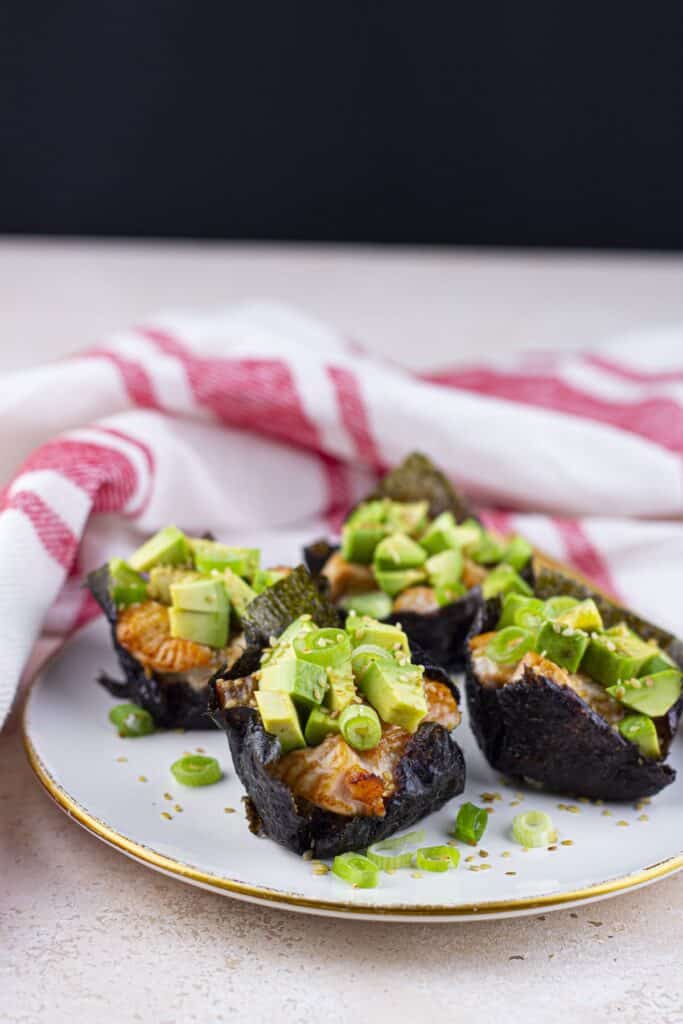
If you’re craving sushi but want something simple and baked instead of raw, these salmon sushi cups are a fun choice. They’re low-carb, simple to assemble, and packed with flavor in every bite.

These sushi cups are keto-friendly because they use cauliflower rice instead of traditional sushi rice, keeping the carb count low while still delivering that classic sushi flavor.
We’ve been rotating these into our weeknight dinners lately, especially when we have leftover salmon or avocado on hand. If you love recipes like my Spicy Salmon Bowl or Spicy Shrimp Tacos, you’ll want to add this one to your to-try list too.
Why You’ll Love This Recipe
- Quick and Easy: Minimal prep and bakes in just 15 minutes.
- Low-Carb Friendly: Uses cauliflower rice instead of traditional sushi rice. Cauliflower rice is made from finely chopped cauliflower and is naturally low in carbohydrates, making it an ideal substitute for grains like white rice or quinoa.
- Packed with Flavor: A savory mix of salmon, soy sauce, sesame, and creamy mayo.
- Customizable: You can swap in different proteins, toppings, or sauces.
- Fun to Eat: A bite-sized, baked twist on sushi rolls – no rolling required.
Ingredients
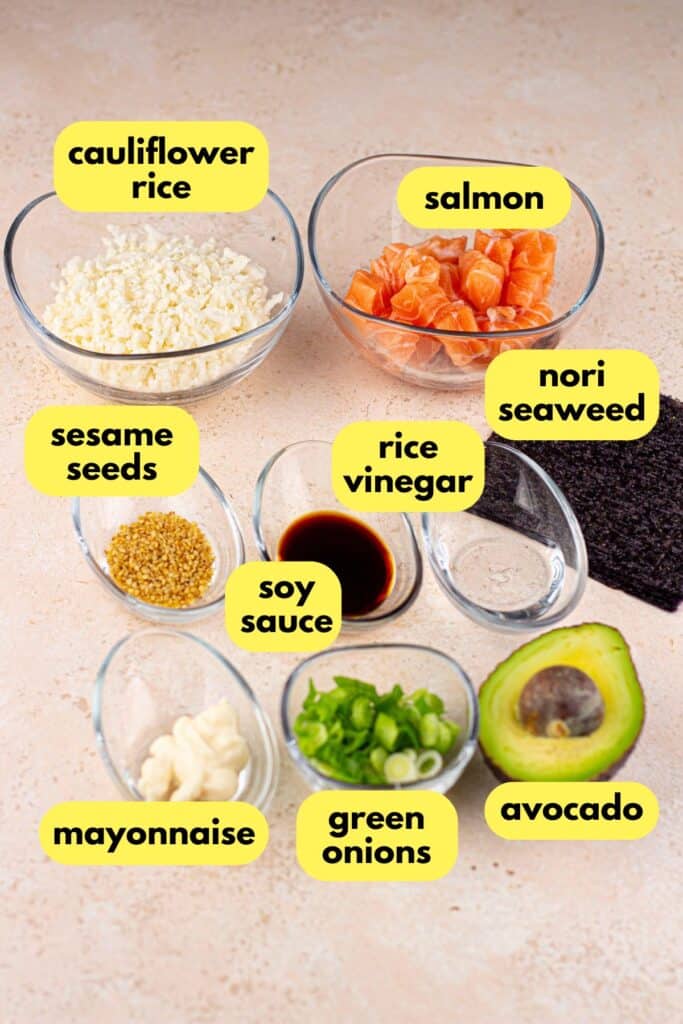
- Cauliflower Rice: A great low-carb base that mimics the texture of sushi rice when seasoned with rice vinegar. You can use fresh or frozen – just be sure it’s dry before using.
- Salmon: Diced raw salmon becomes tender and flavorful when baked. Choose sushi-grade if possible, or high-quality fresh salmon.
- Green Onions: Adds a pop of freshness and mild onion flavor that complements the rich salmon.
- Mayonnaise: Binds the salmon mixture and adds a creamy texture. You can use traditional or Japanese mayo for an extra boost of flavor.
- Sesame Seeds: A nutty, toasty finish that brings the whole bite together.
- Soy Sauce: Deepens the umami flavor and seasons the fish beautifully.
- Rice Vinegar: Adds a tangy brightness to the cauliflower rice, similar to traditional sushi rice prep.
- Avocado: Creamy and cooling, it balances the warm salmon topping after baking.
- Nori Seaweed Sheets: These create the “cup” structure and add that signature sushi flavor.
Substitutions and Additions
- Use Sushi Rice Instead of Cauliflower: If you’re not concerned with carbs, you can use short-grain sushi rice prepared with vinegar, sugar, and salt.
- Try Canned Salmon: Don’t have fresh salmon? Canned works too – just drain well and flake before mixing.
- Add Spicy Mayo: Mix a little sriracha into your mayo for a spicy kick.
- Top with Pickled Ginger or Wasabi: Add extra sushi-style toppings to personalize each bite.
- Use Tuna Instead of Salmon: Sashimi-grade tuna is a delicious alternative here.
- Swap Nori for Rice Paper Cups: If you’re out of seaweed, use softened rice paper shaped into muffin tins for a different texture.
Step by Step Instructions
Prep the Salmon Mixture
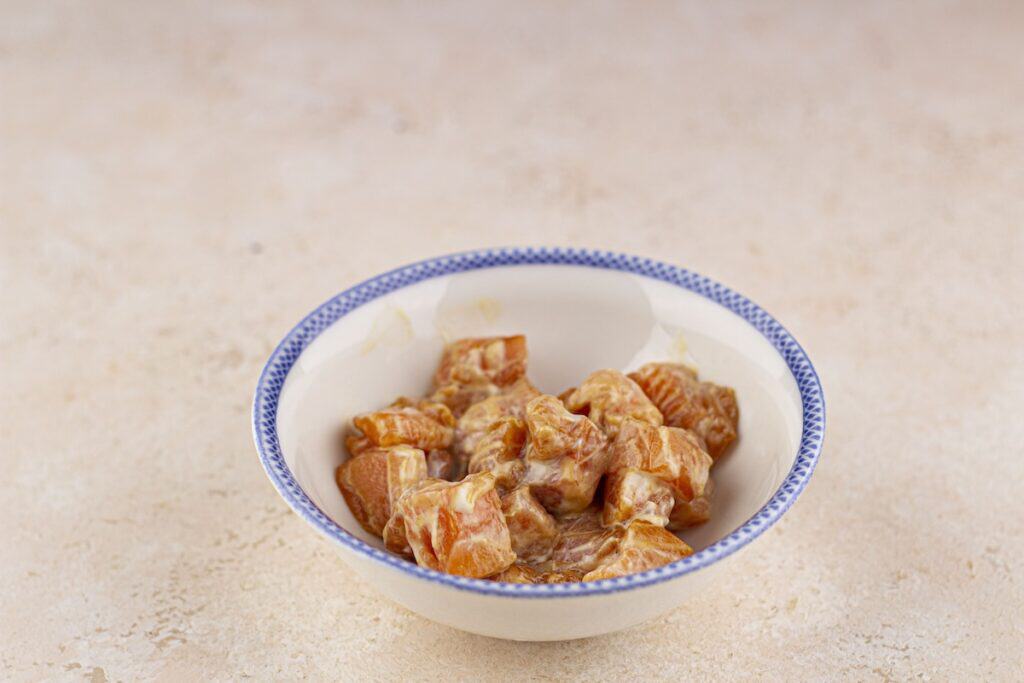
In a small bowl, add the chopped salmon, mayonnaise, and soy sauce. Stir gently to coat the salmon evenly. You want the pieces to be creamy and well-seasoned, but not mushy.
Season the Cauliflower Rice
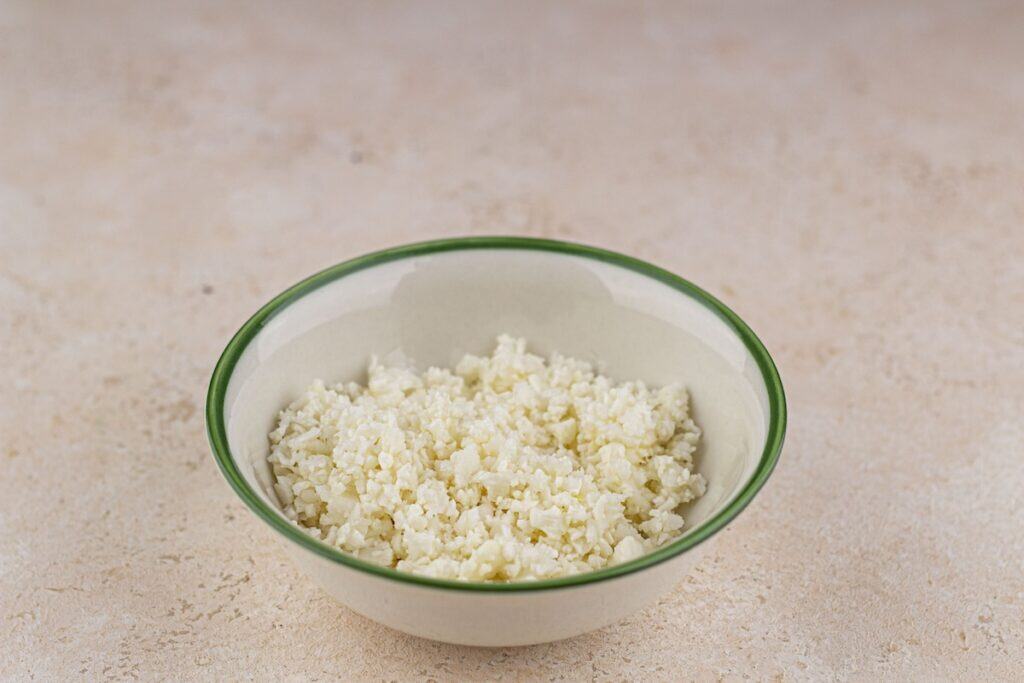
In a separate bowl, mix the cauliflower rice with rice vinegar. Taste and adjust as needed – you want a little tang, just like seasoned sushi rice.
Build the Nori Cups
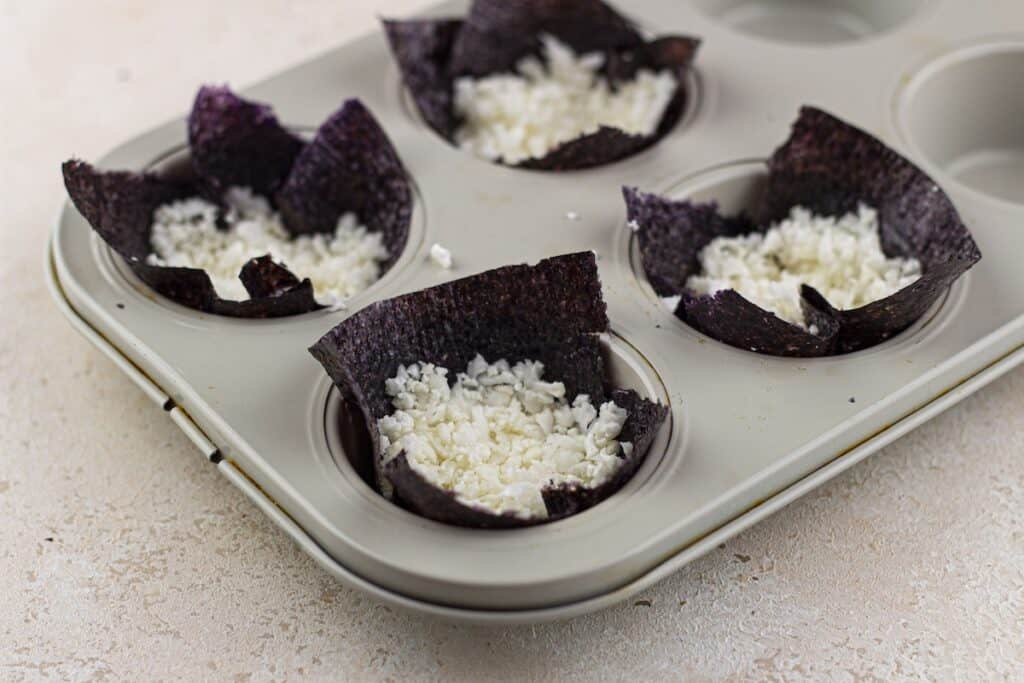
Cut the nori sheets into squares that fit into the wells of a muffin tin. Gently press each square into the muffin cups to form little bowls.
Layer the Cauliflower Rice
Spoon cauliflower rice into each nori cup, pressing lightly so it holds its shape but isn’t too compact.
Add the Salmon
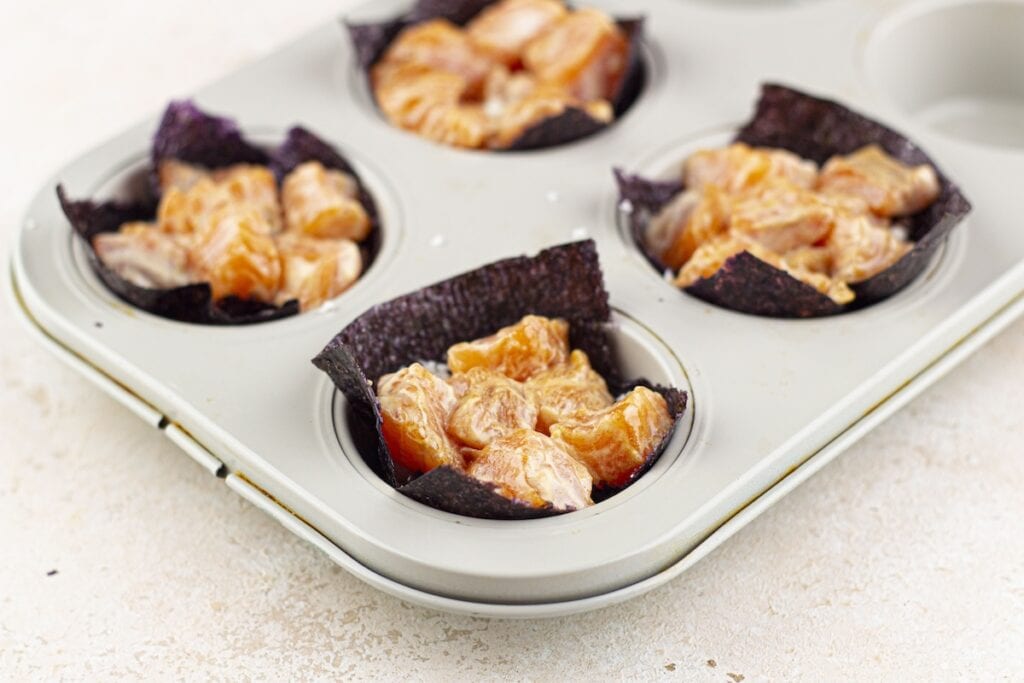
Top the cauliflower with your salmon mixture. Don’t overfill – leave a little room for the toppings after baking.
Bake the Sushi Cups
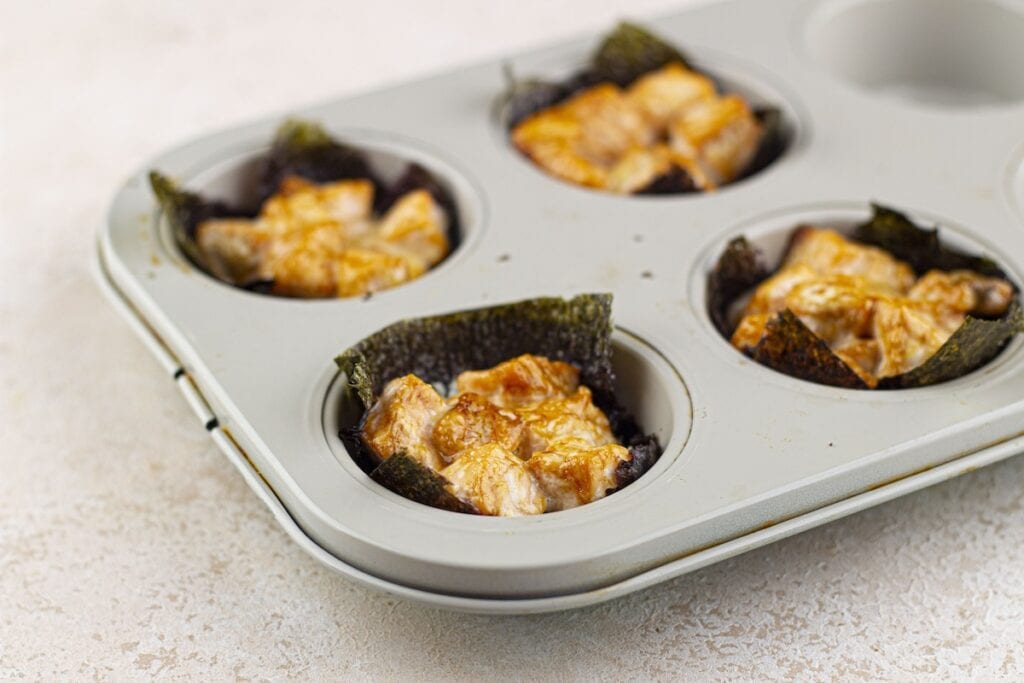
Bake at 400°F (200°C) for about 15 minutes, until the salmon is just cooked and everything looks golden around the edges.
Finish with Toppings
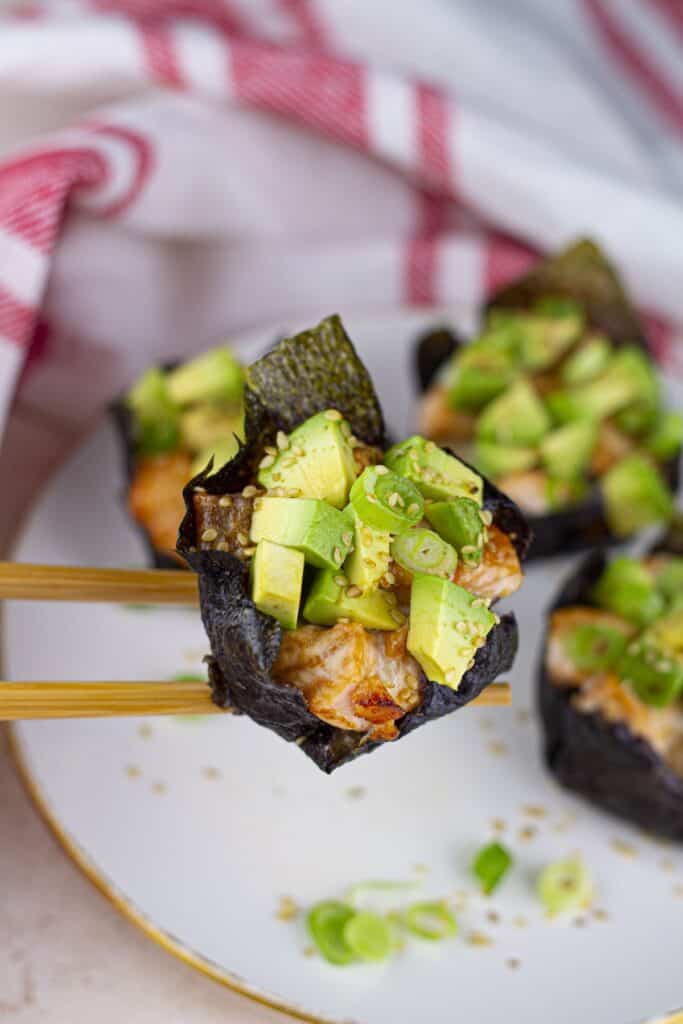
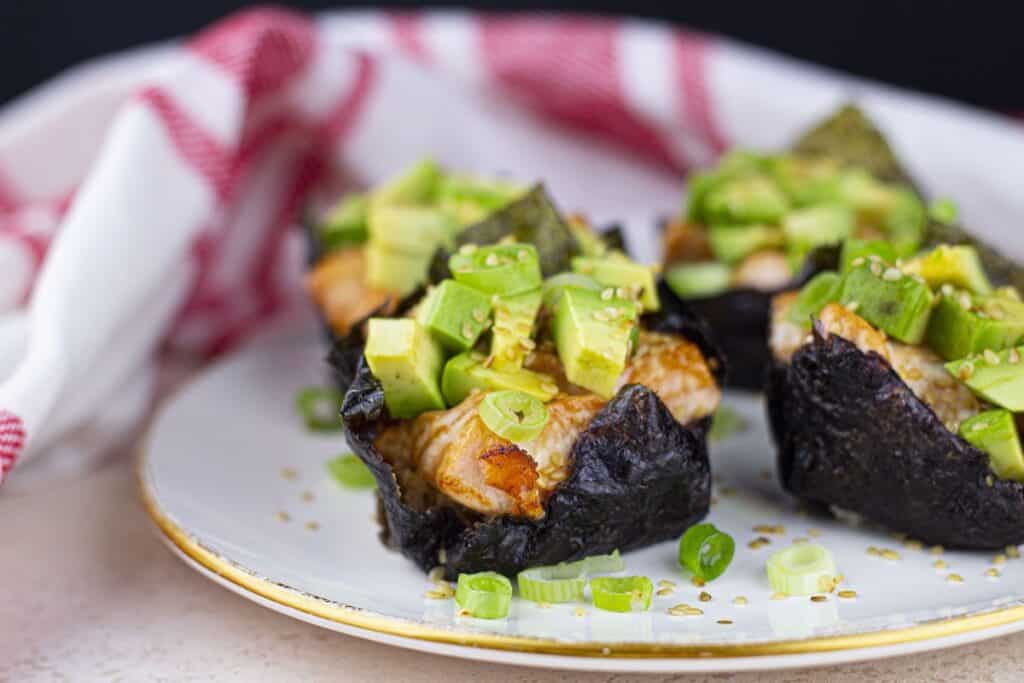
Once out of the oven, top each cup with diced avocado and a sprinkle of sesame seeds. Serve warm or at room temperature.
Tips and Notes
- Dry the Cauliflower Rice: If your cauliflower rice is wet, sauté it in a pan for a few minutes or blot with paper towels before mixing in the vinegar.
- Use Muffin Liners (Optional): Silicone liners or greased tins can help prevent sticking if your nori is delicate.
- Don’t Overbake the Salmon: Keep an eye on it around the 12-minute mark to avoid drying out the fish.
- Cut the Nori to Fit: Test-fit one square first. If it’s too large, trim the edges slightly so the nori sits flat and forms a clean cup.
Serving Suggestions
- Serve with Soy Sauce or Tamari: A small dish for dipping brings that classic sushi restaurant flavor home.
- Add a Drizzle of Spicy Mayo: Stir together mayonnaise and sriracha, then spoon or pipe it over each cup for a spicy finish.
- Pair with Miso Soup or Edamame: These simple sides round out the meal without stealing the spotlight.
Storage and Reheating Instructions
- Store Leftovers in the Fridge: Place sushi cups in an airtight container and refrigerate for up to 2 days.
- Reheat in the Oven or Air Fryer: Warm at 350°F for 5–7 minutes. Avoid microwaving as it can make the nori chewy.
- Add Avocado Fresh: Only add avocado right before serving to keep it from browning.
Baked Salmon Sushi Cups (Keto-Friendly)
Ingredients
- 1 cup cauliflower rice
- 1 cup diced salmon
- 2 tablespoons chopped green onions
- ½ tablespoon mayonnaise
- 1 teaspoon sesame seeds
- 1 tablespoon soy sauce
- 1 teaspoon rice vinegar
- ½ avocado diced
- 1 –2 sheets nori seaweed
Instructions
- In a small bowl, add the chopped salmon, mayonnaise, and soy sauce. Stir gently to coat the salmon evenly. You want the pieces to be creamy and well-seasoned, but not mushy.
- In a separate bowl, mix the cauliflower rice with rice vinegar. Taste and adjust as needed – you want a little tang, just like seasoned sushi rice.
- Cut the nori sheets into squares that fit into the wells of a muffin tin. Gently press each square into the muffin cups to form little bowls.
- Spoon cauliflower rice into each nori cup, pressing lightly so it holds its shape but isn’t too compact.
- Top the cauliflower with your salmon mixture. Don’t overfill – leave a little room for the toppings after baking.
- Bake at 400°F (200°C) for about 15 minutes, until the salmon is just cooked and everything looks golden around the edges.
- Once out of the oven, top each cup with diced avocado and a sprinkle of sesame seeds. Serve warm or at room temperature.