Veggie Minestrone Soup
There’s nothing quite like a big pot of hearty minestrone simmering away in the kitchen. This veggie-packed soup is warm, nourishing, and perfect for evenings when you want something wholesome but easy to make. Plus, it’s a great way to use up whatever vegetables you have on hand.

I’ve been making versions of this minestrone for years, especially during the colder months when I’m craving something comforting yet full of fresh flavors. It’s one of those recipes you can adapt endlessly – great for cleaning out the fridge.
If you enjoy this recipe, you might also love my Miso Corn Soup, Red Lentil Coconut Soup, Roasted Cauliflower Soup, or my Easy Vegan Roasted Tomato Basil Soup for another cozy night in.

Why You’ll Love This Recipe
- Packed with a variety of fresh vegetables for flavor and nutrition.
- Ready in under 45 minutes – perfect for weeknight dinners.
- Naturally vegetarian and easy to make vegan.
- Great for meal prep, as it reheats well for lunch the next day.
Ingredients
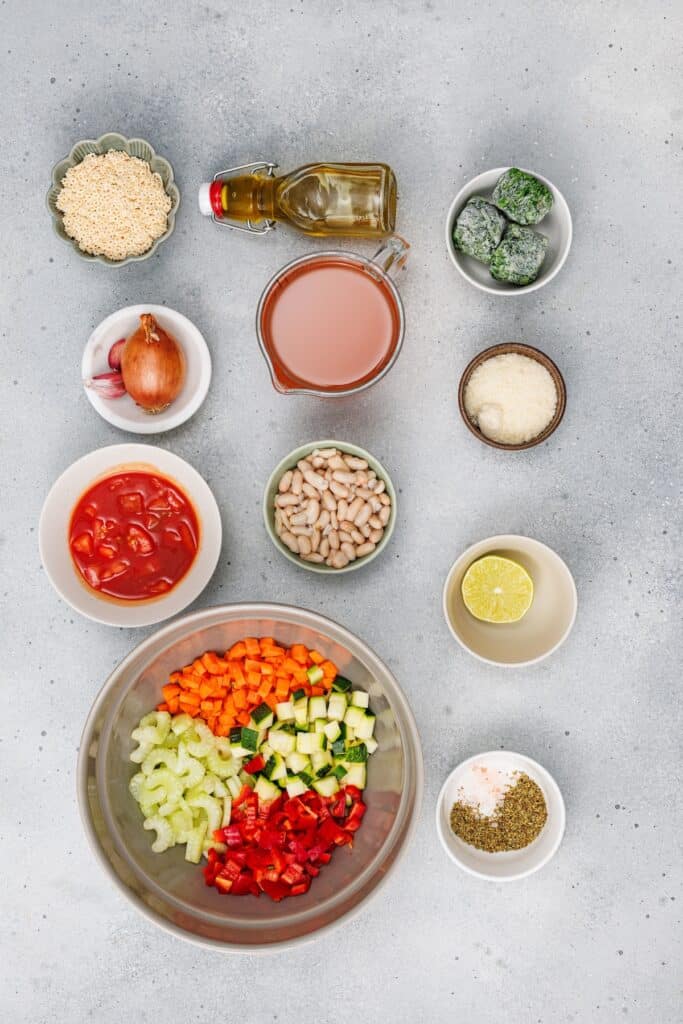
- Olive Oil: Adds richness and helps soften the vegetables while releasing their flavor.
- Onion: The flavor base that gives the soup its savory depth.
- Garlic: Brings a warm, aromatic note that ties the flavors together.
- Carrots: Add natural sweetness and heartiness to the soup.
- Celery: Gives a subtle earthy flavor and aromatic backbone.
- Zucchini: Light and tender, it soaks up the flavors of the broth beautifully.
- Red Bell Pepper: Adds sweetness and a pop of color to the bowl.
- Diced Tomatoes: Provide tangy brightness and help form the soup’s base.
- White Beans: Add plant-based protein and a creamy texture.
- Small Pasta: Makes the soup more filling and comforting.
- Vegetable Broth: The foundation of the soup – use a good-quality broth for best flavor.
- Dried Oregano: Adds an earthy, herbal aroma.
- Dried Basil: Brings a sweet, slightly peppery note.
- Dried Thyme: Adds a subtle, savory depth.
- Salt and Black Pepper: Essential for seasoning and balancing flavors.
- Spinach or Kale: Boosts the soup’s nutrition with leafy greens.
- Fresh Basil: Brightens the dish when added just before serving.
- Grated Parmesan (optional): Adds a salty, nutty finish if you’re not making the soup vegan.
Substitutions and Additions
- Olive Oil: Swap with avocado oil or coconut oil if preferred.
- White Beans: Try chickpeas, kidney beans, or lentils for a twist.
- Pasta: Use gluten-free pasta or even small gnocchi for a different texture.
- Vegetable Broth: Use homemade broth for an even richer flavor.
- Spinach or Kale: Swap with Swiss chard or collard greens.
- Add More Veggies: Potatoes, mushrooms, or corn can be stirred in for variety.
Step by Step Instructions
Sauté the Aromatics
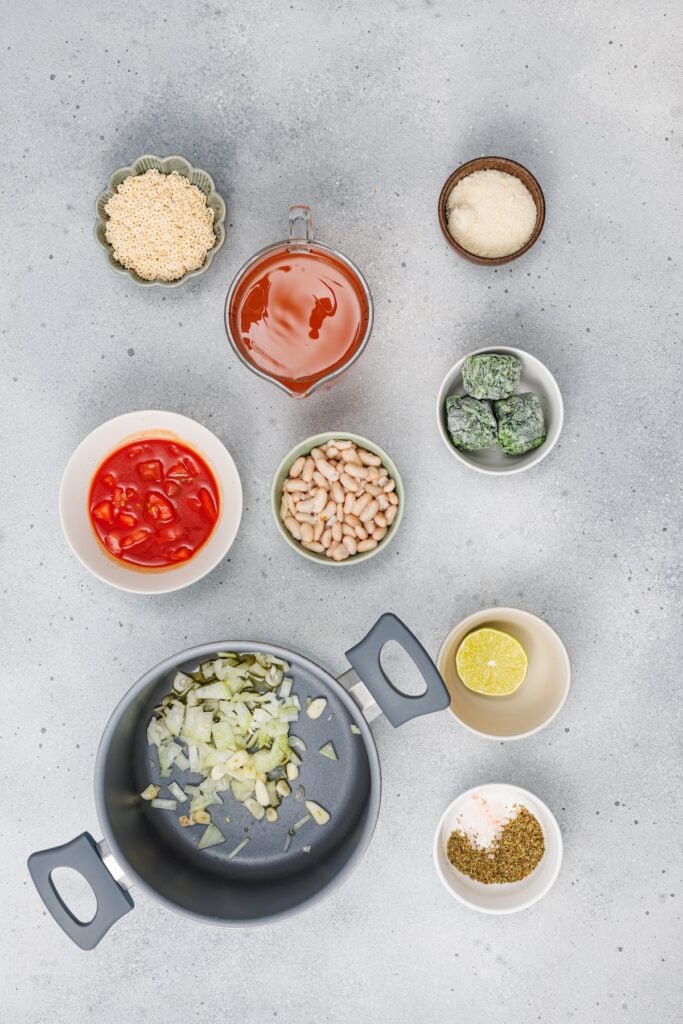
Heat the olive oil in a large, heavy-bottomed pot over medium heat. Add the diced onion first and stir it around for about 1 minute to start softening. Then add the minced garlic, stirring often so it doesn’t burn.
Cook together for 2–3 minutes until the onion looks translucent and the garlic smells fragrant. This step builds the flavor foundation for the entire soup.
Cook the Vegetables
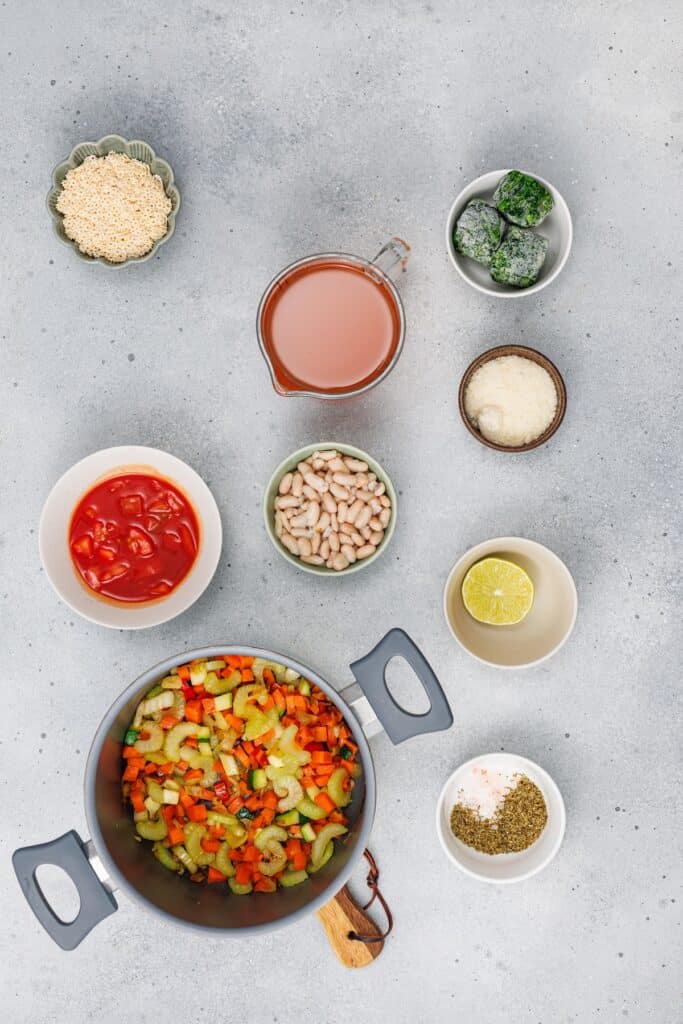
Add the carrots, celery, zucchini, and red bell pepper to the pot. Stir to coat them in the oil and aromatics.
Let them cook for about 5 minutes, stirring every so often so they soften slightly but still hold their shape. You’ll notice the colors brighten and the vegetables start to release their natural sweetness.
Add Liquids and Seasonings
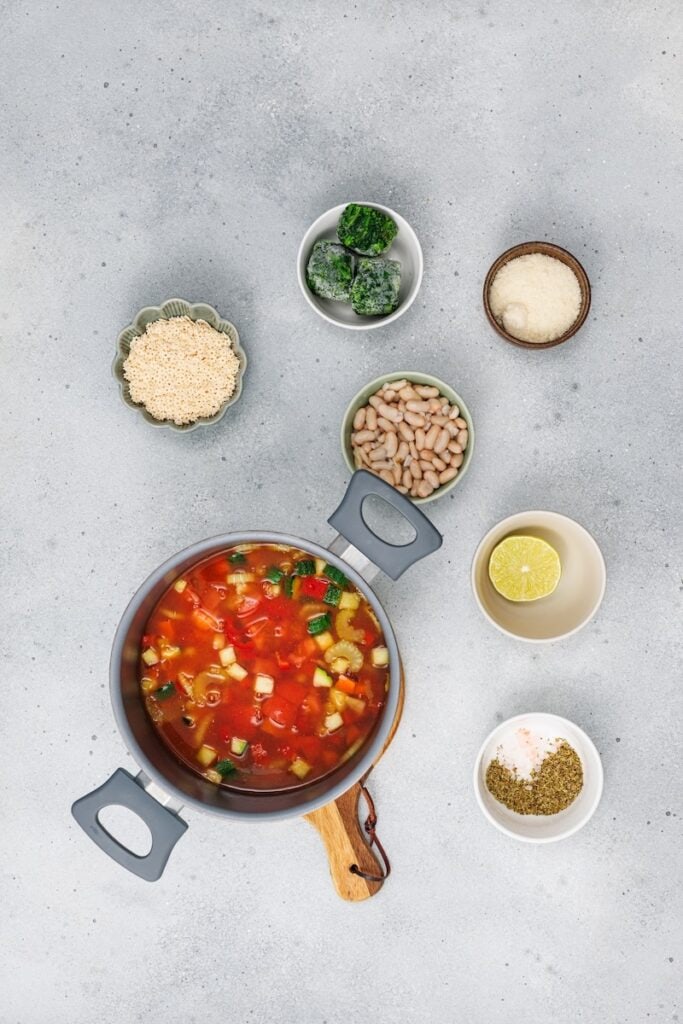
Pour in the can of diced tomatoes (with all their juices) and the vegetable broth. Give everything a good stir to combine. Sprinkle in the dried oregano, dried basil, dried thyme, salt, and pepper.
Turn the heat up just enough to bring the soup to a gentle boil – this helps the dried herbs release their flavor into the broth.
Simmer the Soup
Once boiling, reduce the heat to low so the soup is just simmering. Let it cook for 10 minutes without a lid, which allows the flavors to meld and the broth to become richer.
Stir once or twice during this time to keep everything cooking evenly.
Add Pasta and Beans
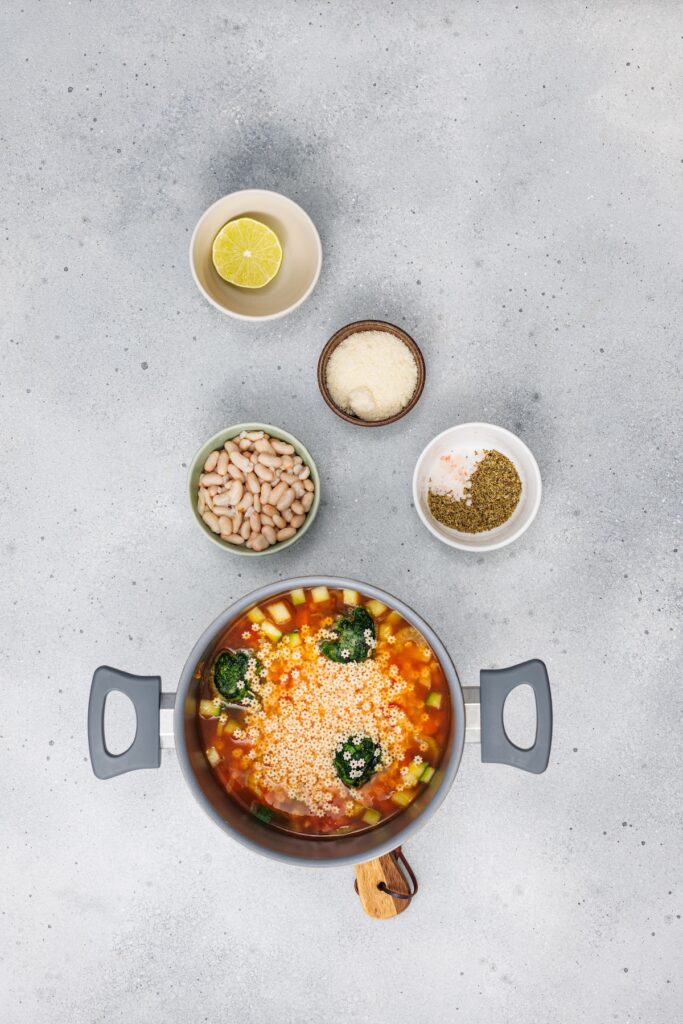
Stir in the white beans and pasta. Keep the soup at a gentle simmer and cook for about 10 minutes more, or until the pasta is just al dente.
Stir occasionally to prevent the pasta from sticking together or settling at the bottom. If the soup starts to get too thick, you can add a splash of extra broth or water.
Add the Greens
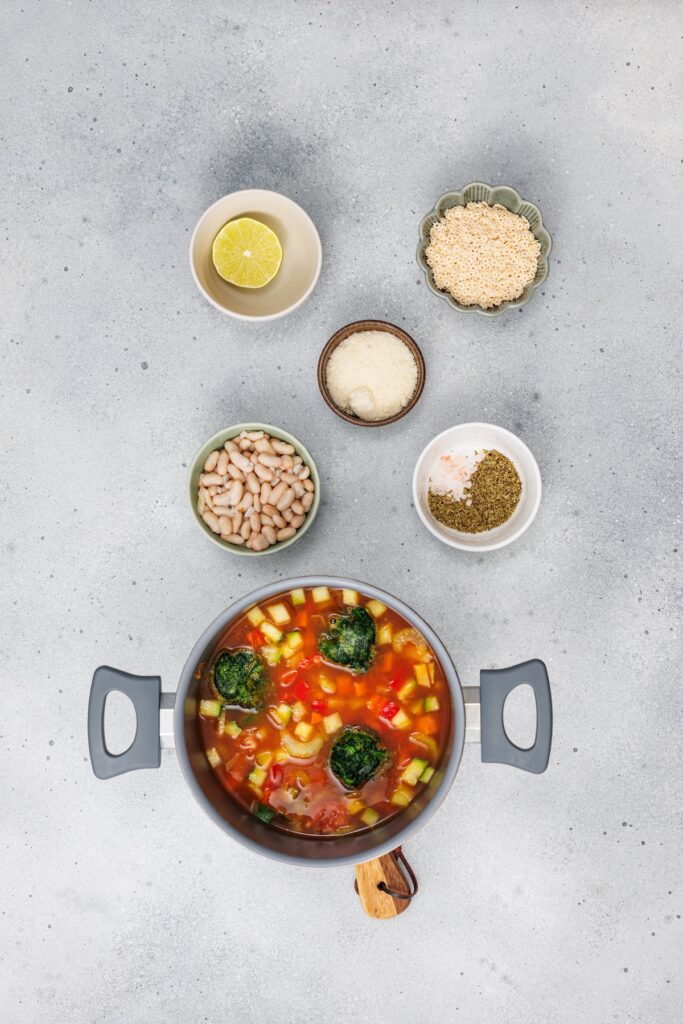
Once the pasta is cooked, add the spinach or kale. Stir gently and let the greens wilt for about 2 minutes. They should turn a vibrant green and become tender without overcooking.
Finish and Serve
Taste the soup and adjust the seasoning if needed by adding more salt or pepper. Ladle the soup into bowls while it’s piping hot.
Garnish each serving with fresh basil (or parsley) and a sprinkle of Parmesan cheese if desired. Serve right away for the best flavor.

Tips and Notes
- Cut Vegetables Evenly: Try to keep your vegetable pieces about the same size so they cook at the same rate. This makes for a better texture in every spoonful and avoids some pieces being undercooked while others are too soft.
- Don’t Overcook Pasta: Pasta continues to absorb broth even after you turn off the heat. Stop cooking it when it’s just al dente so it stays pleasantly firm by the time you serve. If reheating leftovers, you may need to add extra broth to loosen it up.
- Taste and Season in Layers: Add a pinch of salt after sautéing the vegetables, then again after adding the broth, and once more right before serving. Layering your seasoning this way creates a deeper, more balanced flavor rather than just adding salt at the end.
- Use Good-Quality Broth: Since the broth makes up much of the soup’s flavor, choose one you love the taste of. A homemade vegetable broth will give the richest flavor, but a good store-bought version works well too.
- Make It Vegan: Simply skip the Parmesan garnish or replace it with a dairy-free Parmesan alternative or nutritional yeast for a cheesy flavor.
- Add Extra Protein if Desired: While the white beans provide protein, you can stir in chickpeas, lentils, or even cubed tofu toward the end for an extra boost.
- Make Ahead for Better Flavor: This soup tastes even better the next day after the flavors have had time to develop. Store it in the fridge overnight and reheat gently before serving.
- Adjust the Consistency: If you prefer a brothier soup, add an extra cup of vegetable broth. For a thicker, heartier texture, let it simmer a few extra minutes uncovered to reduce slightly.

Serving Suggestions
- Serve with Crusty Bread: A warm loaf of sourdough or a fresh baguette is perfect for dipping into the rich broth. The bread soaks up the flavors beautifully and makes each bite more satisfying.
- Pair with a Side Salad: A crisp green salad with a tangy vinaigrette balances the hearty richness of the soup. This combo makes for a light yet filling meal.
- Serve with Garlic Bread: For a more indulgent pairing, serve the soup alongside buttery garlic bread. The savory garlic flavor is amazing with the tomato-based broth.
- Enjoy as Part of a Soup-and-Sandwich Meal: Pair it with a grilled veggie panini or a caprese sandwich for a complete lunch or dinner.
Storage and Reheating Instructions
- Refrigeration: Store in an airtight container in the fridge for up to 4 days.
- Freezing: Freeze in portions for up to 3 months. Thaw overnight in the fridge before reheating.
- Reheating: Warm gently on the stove over medium heat or in the microwave until heated through. Add extra broth if needed, as pasta can absorb liquid over time.
Want more comforting vegetarian soup recipes? Be sure to check out my collection of 10 Hearty Vegetarian Soups!

Veggie Minestrone Soup
Ingredients
- 2 tablespoons olive oil
- 1 onion diced
- 2 cloves garlic minced
- 2 carrots chopped
- 2 celery stalks chopped
- 1 zucchini diced
- 1 red bell pepper chopped
- 1 can 14 ounces diced tomatoes
- 1 can 14 ounces white beans, drained and rinsed
- 1/2 cup small pasta such as ditalini or elbow
- 4 cups vegetable broth
- 1 teaspoon dried oregano
- 1 teaspoon dried basil
- 1/2 teaspoon dried thyme
- Salt and black pepper to taste
- 1 handful fresh spinach or kale chopped
- Fresh basil and grated Parmesan for serving (optional)
Instructions
- Heat the olive oil in a large, heavy-bottomed pot over medium heat. Add the diced onion first and stir it around for about 1 minute to start softening. Then add the minced garlic, stirring often so it doesn’t burn.
- Cook together for 2–3 minutes until the onion looks translucent and the garlic smells fragrant. This step builds the flavor foundation for the entire soup.
- Add the carrots, celery, zucchini, and red bell pepper to the pot. Stir to coat them in the oil and aromatics.
- Let them cook for about 5 minutes, stirring every so often so they soften slightly but still hold their shape. You’ll notice the colors brighten and the vegetables start to release their natural sweetness.
- Pour in the can of diced tomatoes (with all their juices) and the vegetable broth. Give everything a good stir to combine. Sprinkle in the dried oregano, dried basil, dried thyme, salt, and pepper.
- Turn the heat up just enough to bring the soup to a gentle boil – this helps the dried herbs release their flavor into the broth.
- Once boiling, reduce the heat to low so the soup is just simmering. Let it cook for 10 minutes without a lid, which allows the flavors to meld and the broth to become richer.
- Stir once or twice during this time to keep everything cooking evenly.
- Stir in the white beans and pasta. Keep the soup at a gentle simmer and cook for about 10 minutes more, or until the pasta is just al dente.
- Stir occasionally to prevent the pasta from sticking together or settling at the bottom. If the soup starts to get too thick, you can add a splash of extra broth or water.
- Once the pasta is cooked, add the spinach or kale. Stir gently and let the greens wilt for about 2 minutes. They should turn a vibrant green and become tender without overcooking.
- Taste the soup and adjust the seasoning if needed by adding more salt or pepper. Ladle the soup into bowls while it’s piping hot.
- Garnish each serving with fresh basil (or parsley) and a sprinkle of Parmesan cheese if desired. Serve right away for the best flavor.